Corporate income tax
19% / 25.8%
19% on first €200,000 taxable profit; 25.8% above

Assess a European base for distribution, international business and technology, with the operating detail that a successful entry requires.
Start your journey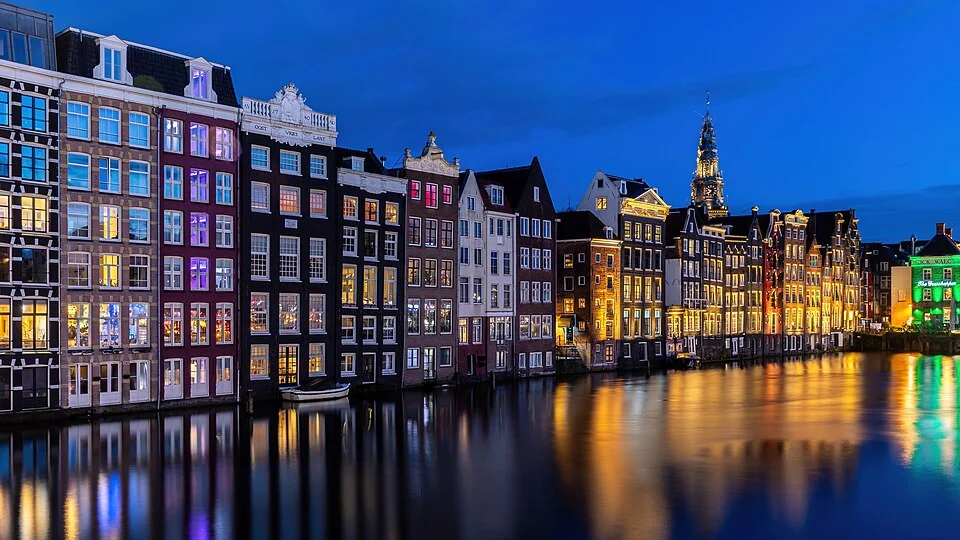
19% / 25.8%
19% on first €200,000 taxable profit; 25.8% above
21%
Reduced rates and exemptions depend on the supply
EUR
Euro
Route-specific
Startup and self-employment permits have separate conditions
The Commission forecasts 1.0% GDP growth in 2026. Logistics and high-tech clusters offer useful connections, while grid congestion, permitting constraints, wages and energy costs require attention when choosing a location.
European Commission · May 2026 forecast (opens in a new tab)Start with a defined opportunity, then assess the route to market.
Evaluate logistics providers and distributors for warehousing, delivery and customer access before establishing your own operation.
Invest in Holland · logistics (opens in a new tab)Explore specialised engineering, technology and software connections with a clear product or service proposition.
Invest in Holland · high-tech (opens in a new tab)Choose the scope of a local presence around customer needs, staffing, premises and the ability to support ongoing operations.
Taxes, establishment and the detail behind a commercial decision.
For 2026, the rate is 19% on the first €200,000 of taxable profit and 25.8% above that amount. The threshold applies to profit, not turnover.
Dutch government · corporation tax (opens in a new tab)Standard VAT is 21%. Assess premises, energy capacity, staffing and logistics costs early, particularly for physical operations.
EU VAT rates (opens in a new tab)The startup permit is for qualifying innovative businesses and requires a facilitator. An ordinary trading company should assess the appropriate route rather than assume startup eligibility.
Dutch government · startup requirements (opens in a new tab)Company or branch registration and permission to live or work are separate questions. Confirm the legal form, local address, banking and residence requirements.
Dutch government · branches (opens in a new tab)Check your product’s HS code, origin, customs duties and applicable standards. Include freight, import VAT and distributor margins in the landed cost before choosing a route to market.
EU Access2Markets (opens in a new tab)Headline tax rates are not the total cost of operating. Reduced rates, sector rules, payroll obligations and large-group regimes may apply. Incorporation and permission to live or work are separate processes.
Test customer demand, compare delivery partners and choose an operating model before committing to premises or personnel. Assess the founder route alongside the commercial plan.
Guidance that starts with your goals.
Define your market, customers and commercial objectives.
Prepare the relevant registrations and visa applications for your chosen route.
Move forward with your business and trade connections.
No. Company registration, ownership, residence and permission to work are distinct matters. The appropriate immigration route depends on your nationality, intended activity and eligibility.
That depends on your product or service, customers, budget and staffing needs. A distributor, commercial partnership, branch or locally established company may serve different objectives.
Tell us about your business. We’ll help you explore the next step.
Amsterdam · Damrak · Basile Morin · CC BY-SA 4.0. Resized, WebP format; cropped to fit the layout. The photograph retains its stated licence.
Last reviewed · Guidance for applicants and businesses based in India.